Constructing an insect hotel
A few years ago I moved next to Wycliffe green in Shipley, and joined a local community group called Wycliffe Neighborhood Association (WNA) who were initially set up to prevent construction on the green, but now act more as stewards. They organise activites and fundraisers, maintain the land, and run projects. That sort of thing.
The insect hotel project
Me and my partner volunteered to put together an insect hotel for the green with the following goals:
- Attracting pollenators such as solitary bees and wasps to help spread our wildlflowers.
- Attracting aphid predators such as ladybirds and lacewings to protect our orchards and planters.
- Providing a shelter for butterflies, ladybirds and other hibernating insects to spend the winter.
- Creating something beautiful and interesting for people to enjoy, and to draw attention to the community group.
The plan
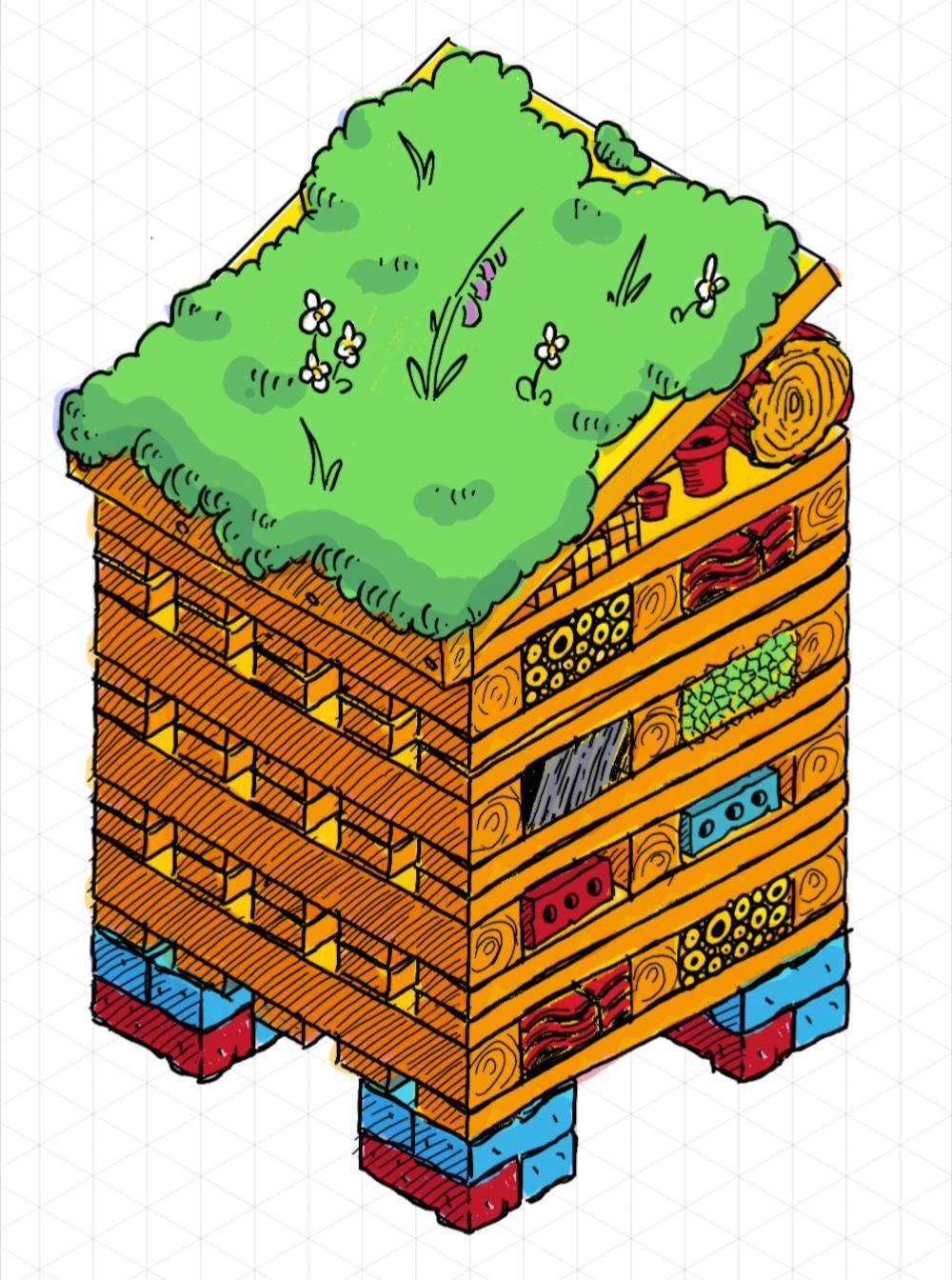
We wanted to build as much from reclaimed and upcycled materials as possible, partly to keep costs down but mostly because of our focus on sustainability. After taking inspiration from the insect hotels created by some other groups, we decided on using a stack of old pallets with a pitched living roof of moss and sedum on the top to keep the inside dry. That gives plenty of volume to pack with filler material, and a nice easy framework to arrange materials on the outside for aesthetic purposes.
Gathering materials
We started by collecting pallets for the frame which are very easy to come by. A lot of shops will simply give them away - especially if they're slightly damaged which doesn't matter for this purpose. In our case we sourced the vast majority from Topps Tiles Shipley with only a couple donated by WNA members.
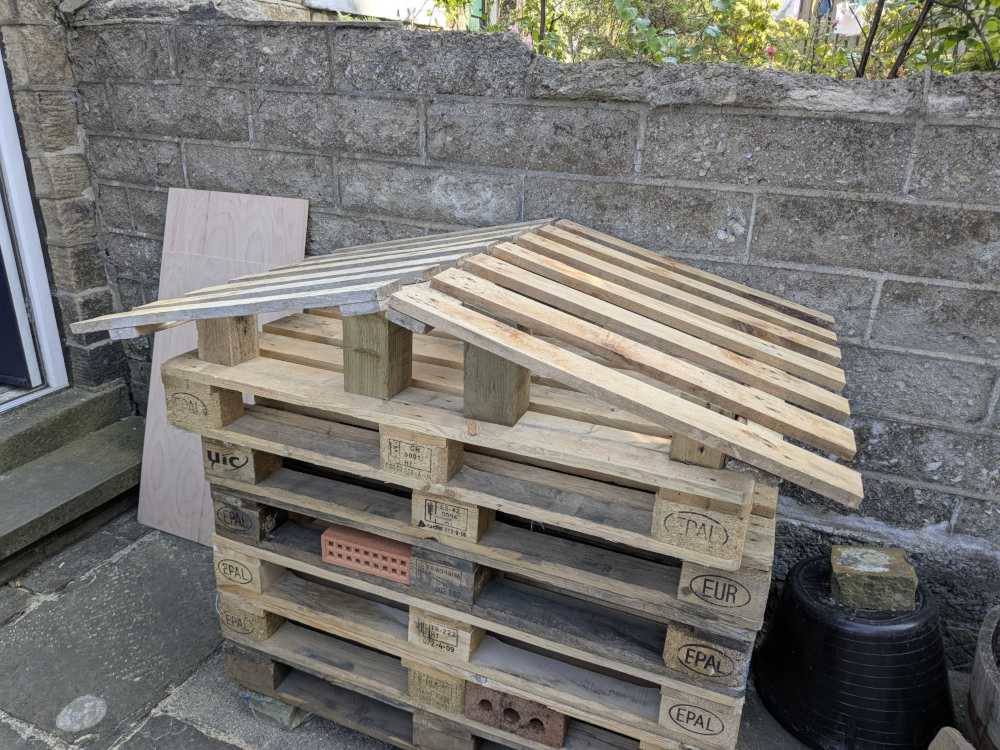
Once we had these, a simple frame was constructed for the roof using wood from the most damaged pallets.
Then it was a case of asking the WNA for donations of filler material, and they really came though! We only ended up buying a tiny fraction of the materials used; We got wood chips, hay, dried leaves, sticks, logs, bricks, broken pots, tiles and more. Some shed roof felt was donated to keep the rain out, and moss to go on top.
Construction
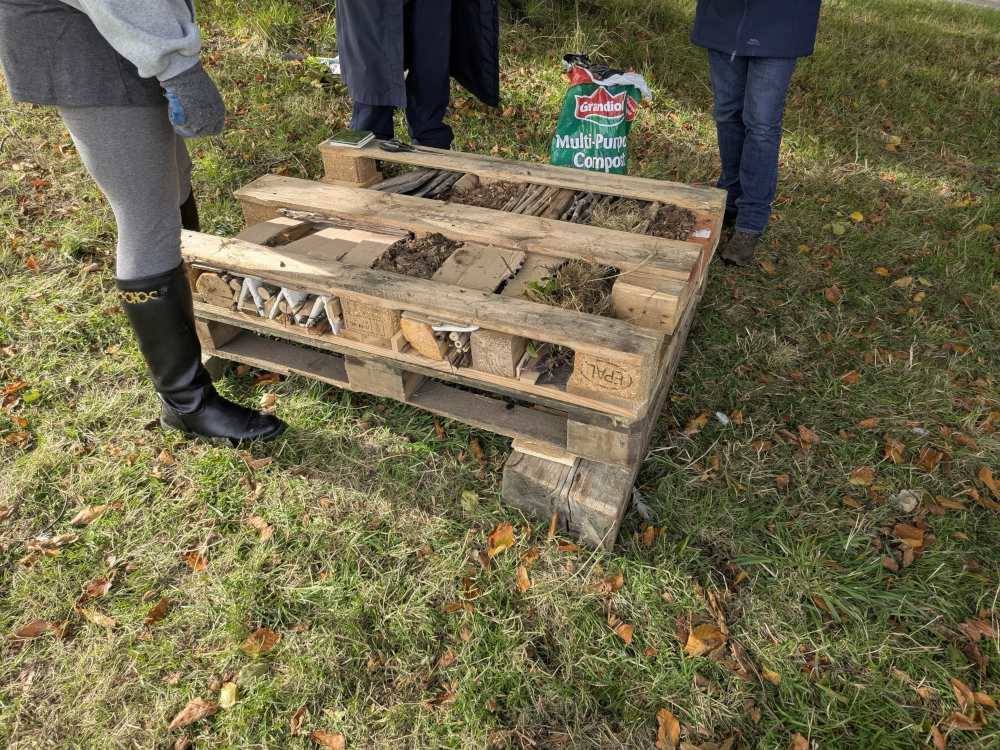
Most of the initial construction took place on the 5th of October 2025 with help of WNA members. After creating a level foundation from reclaimed stone and railway sleepers, we stacked one pallet at a time, filling it with material before adding the next:
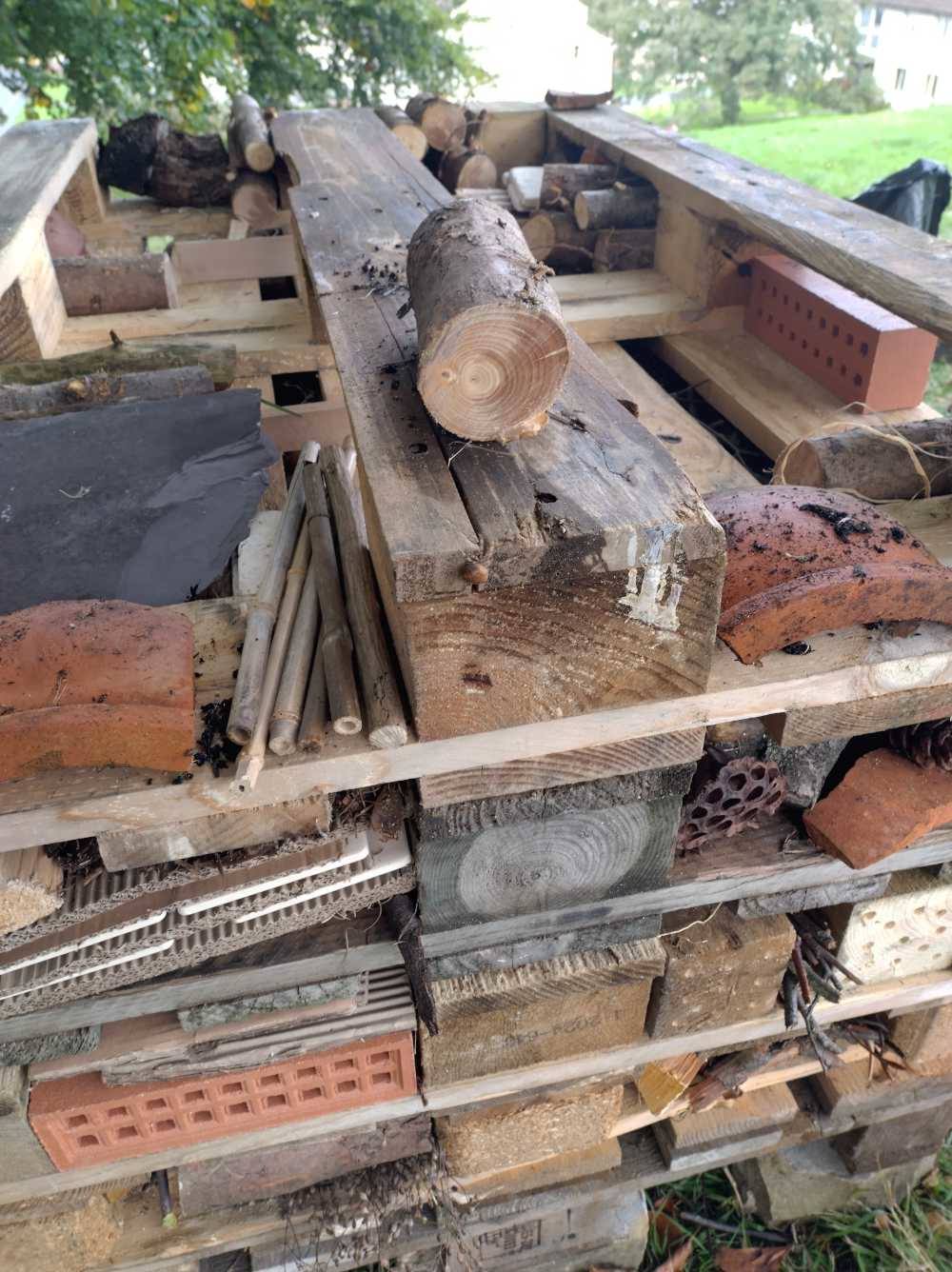
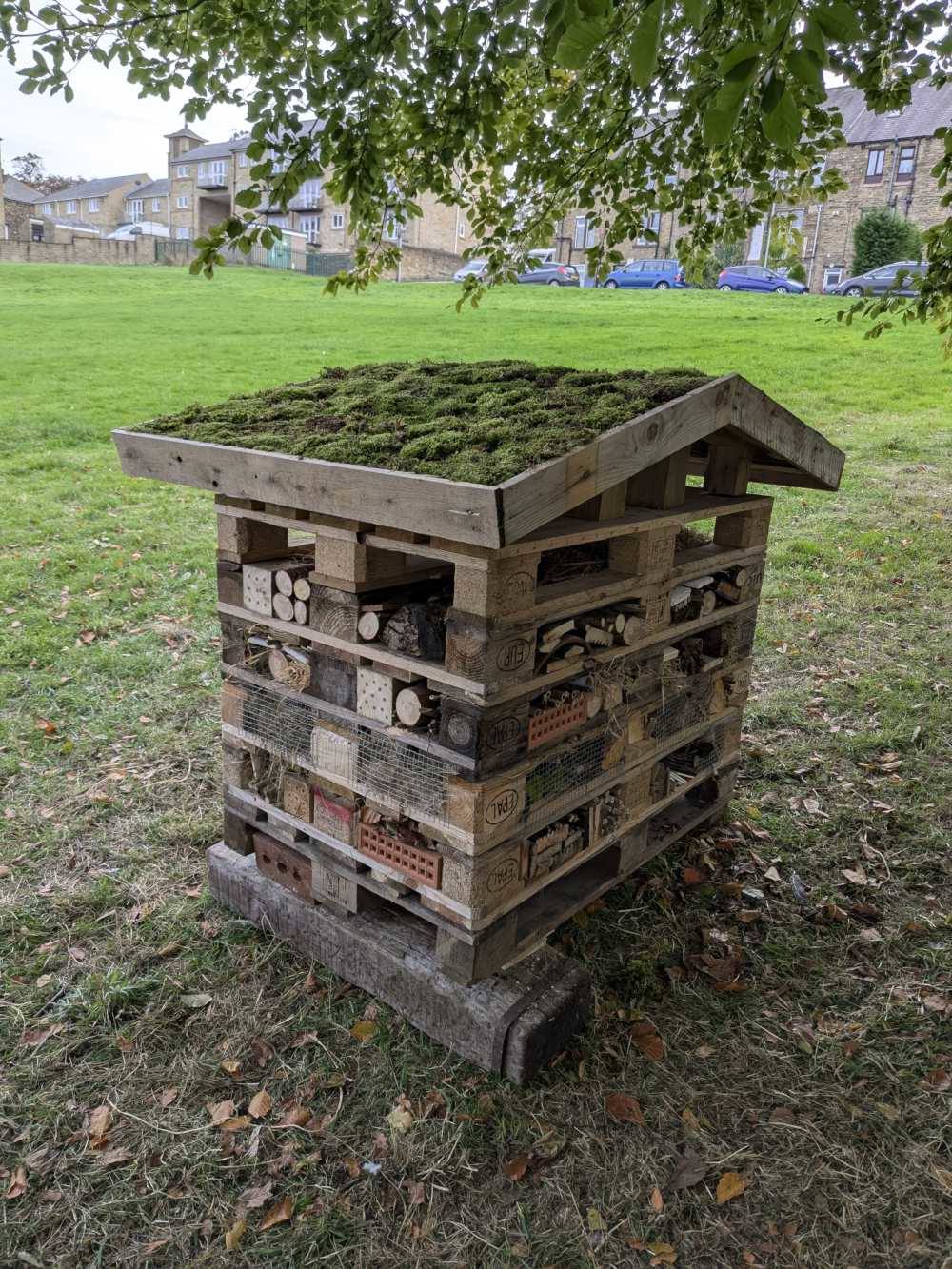
Although we didn't have time to fill the last few gaps at the top, it was looking great! We agreed we would meet at a later date to finish it off.